
The Future of Electric Vehicles: What Drivers Should Expect Next
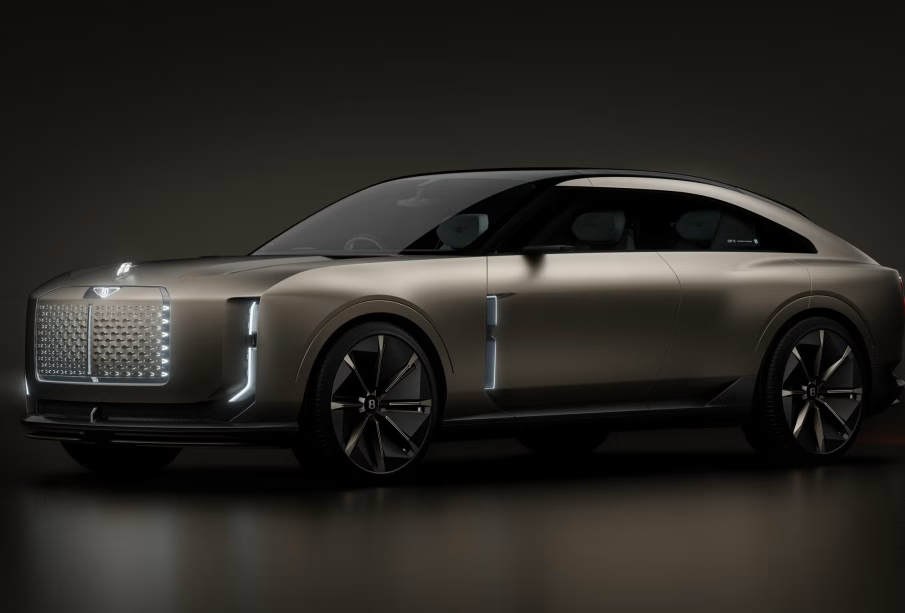
Electric vehicles (EVs) are no longer a niche option for early adopters. They are quickly becoming a mainstream choice, driven by rapid technological innovation, environmental concerns, and shifting consumer expectations. Over the next decade, EV ownership will look very different from today—simpler, smarter, and far more practical for everyday drivers.
Smarter Batteries With Longer Life
Battery technology is at the heart of EV evolution. The next generation of batteries is designed to solve the biggest concerns drivers still have: range, charging time, and durability.
What’s Changing in EV Batteries
- Longer driving ranges, often exceeding 500 miles on a single charge
- Faster charging, with some batteries reaching 80% in under 15 minutes
- Improved longevity, reducing battery degradation over time
- Lower costs, making EVs more affordable across price segments
Solid-state batteries are a major breakthrough on the horizon. By replacing liquid electrolytes with solid materials, they promise higher energy density and improved safety.
Faster and More Accessible Charging
Charging infrastructure is expanding rapidly, making EV ownership more convenient than ever.
What Drivers Can Expect
- Ultra-fast charging stations along highways and urban centers
- More home-charging options, including smart chargers that optimize energy use
- Wireless charging experiments, reducing the need for cables
- Better charging availability in apartments and workplaces
As charging networks grow, “range anxiety” will continue to fade for most drivers.
Lower Costs and Better Value
EV prices have already begun to drop, and this trend is expected to continue.
Key Cost Improvements
- Declining battery production costs
- Reduced maintenance compared to gasoline vehicles
- Improved resale value as EV demand rises
- Expanded incentives and tax benefits in many regions
Over the full ownership lifecycle, EVs are increasingly cheaper than traditional vehicles.
Advanced Software and Autonomous Features
Future EVs will be as much about software as hardware.
Technology Drivers Will Notice
- Over-the-air updates that improve performance and add features
- Advanced driver-assistance systems with better safety and automation
- AI-powered navigation that plans routes based on charging availability
- Personalized driving profiles stored digitally in the vehicle
Cars will feel more like evolving devices than static machines.
Cleaner Manufacturing and Recycling
Sustainability is becoming a core focus beyond just zero tailpipe emissions.
Environmental Improvements Ahead
- Increased use of recycled and bio-based materials
- Closed-loop battery recycling, recovering valuable metals
- Lower carbon footprints in vehicle production
- Cleaner supply chains with fewer rare material dependencies
The goal is not just cleaner driving, but cleaner vehicles from start to finish.
Greater Variety and Customization
The future EV market will not be one-size-fits-all.
Expanding Choices for Drivers
- Electric pickup trucks, SUVs, sedans, and compact cars
- Performance-focused EVs for enthusiasts
- Affordable models designed for urban commuting
- Customizable interiors and digital features
As competition increases, drivers will benefit from more tailored options.
What This Means for Everyday Drivers
For most people, the next wave of EVs will mean:
- Less time spent charging
- Fewer maintenance worries
- Lower running costs
- A quieter, smoother driving experience
Electric vehicles are shifting from “alternative” to “default.”
Frequently Asked Questions
1. Will electric vehicles fully replace gasoline cars?
EVs are expected to dominate new car sales over time, but gasoline vehicles may still exist in limited roles for years, especially in remote regions.
2. How long will future EV batteries last?
Most upcoming batteries are designed to last 10–15 years or more, often outliving the vehicle itself.
3. Are EVs reliable in extreme weather?
New battery management systems are improving performance in both hot and cold climates, reducing range loss.
4. Will charging an EV always be cheaper than buying fuel?
In most cases, yes—especially when charging at home or during off-peak hours.
5. How long does it take to charge next-generation EVs?
Fast chargers can add hundreds of miles of range in under 20 minutes, with improvements ongoing.
6. Are electric vehicles safe?
EVs meet or exceed safety standards, and their low center of gravity often improves crash performance.
7. What happens to EV batteries after they wear out?
Many are reused for energy storage or fully recycled to recover valuable materials.
The future of electric vehicles is not just about replacing engines—it’s about redefining how people move. For drivers, that future is arriving faster than expected.




-
How Small Businesses Can Compete With Big Brands
Big brands dominate headlines, search results, and advertising budgets. Yet small businesses ... -
-
-
-